Technology
Patent-pending systems, engineered offshore-grade
Floating Feed Platform
A compact, moored platform that stores and distributes feed to nearby pens. Designed for distributed deployment: several small units close to the fish instead of one large barge far away. Currently in the engineering phase, being prepared for tank testing and sea pilots.
- Designed for wind and solar power, with surplus energy for service operations
- Gravity-fed, water-borne feed distribution — designed for near-zero energy per tonne fed
- Conical feed tank and moonpool pontoon for gentle, reliable feed handling
- Small footprint, designed for installation and service by ordinary workboats
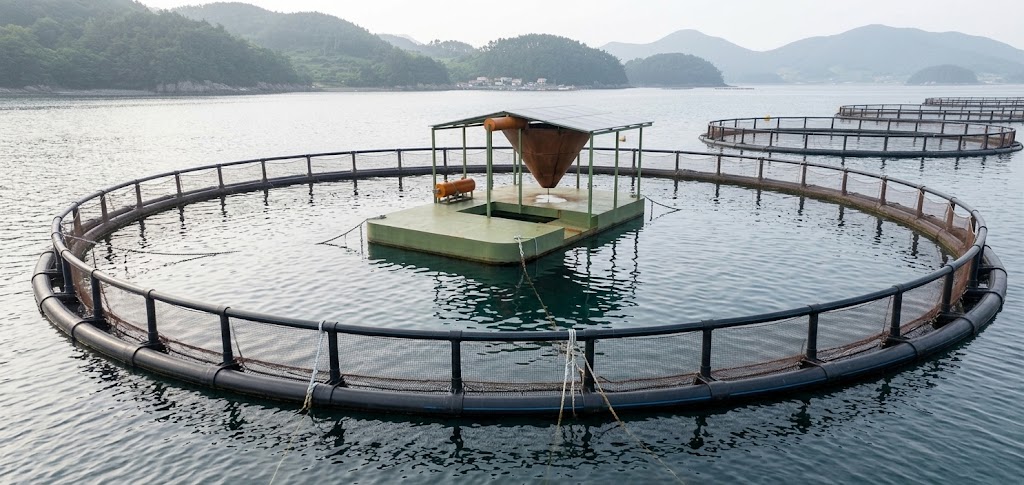
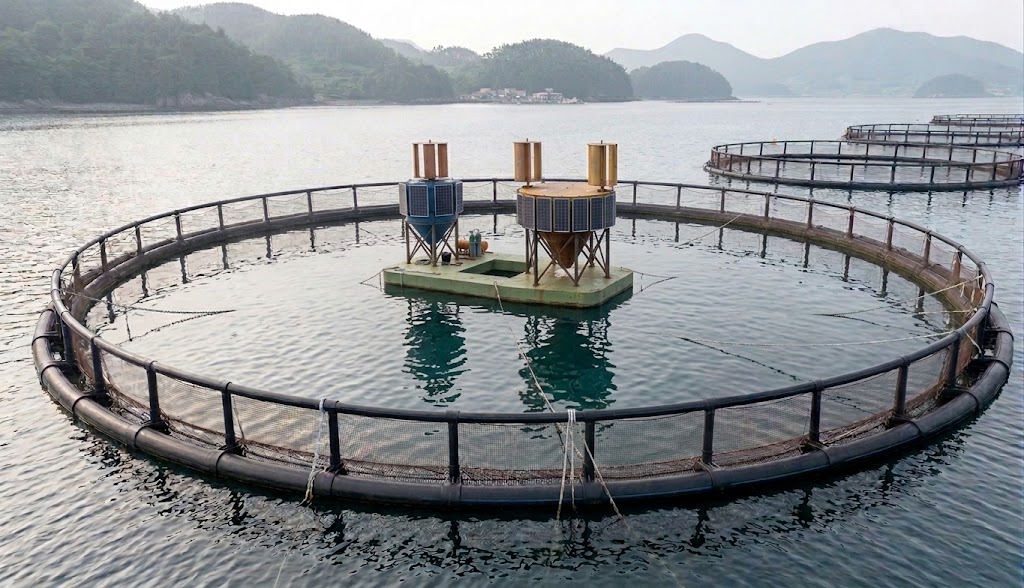
Design targets — Floating Feed Platform
Design arguments and expected effects. To be verified through tank testing and pilot operation.
| Argument | Description | Effect |
|---|---|---|
| Energy | Gravity-fed distribution replaces pneumatic blowers | Near-zero feeding energy |
| Emissions | Wind and solar replace diesel generators | No fuel logistics, no local emissions |
| Feed quality | No high-speed air transport of pellets | Less feed dust and breakage |
| Noise | No compressors or generators running at the farm | Calmer fish, better neighbour relations |
| Distance | Distributed units sit close to the pens they feed | Short lines, precise feeding |
| Investment | Designed for a future service model (HaaS) | Aims to remove the capex barrier for the farmer |
| Maintenance | Few moving parts by design | High uptime, low service cost |
| Installation | Compact units handled by ordinary workboats | Fast, low-cost deployment |
Submersible Pen
A tension-moored pen built around a central column, designed to operate submerged below the turbulent and parasite-rich surface layer — and to ride out typhoons and rough seas where surface pens cannot. Currently in the engineering phase, being prepared for tank testing and sea pilots.
- Designed to operate below the surface layer where lice and many parasites concentrate
- Submersion is designed to protect fish and structure in typhoons and extreme weather
- Aims to open new farming areas: exposed sites, inland seas, and under ice
- Air pocket in the upper collar gives the fish permanent access to air
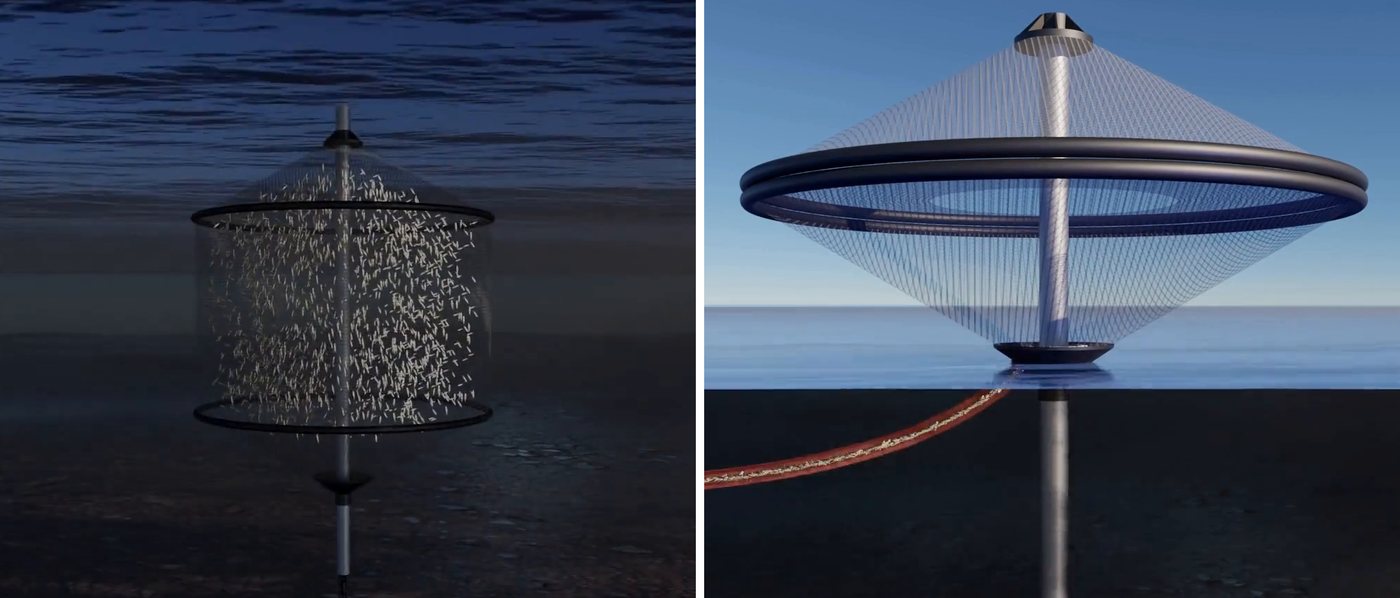
Design targets — Submersible Pen
Design arguments and expected effects. To be verified through tank testing and pilot operation.
| Argument | Description | Effect |
|---|---|---|
| Sea lice | Pen operates below the surface layer where lice concentrate | Lower cost, faster growth, lower mortality |
| Toxic algae | Submersion below algae blooms, as with lice | Avoids loss of entire stock during an attack |
| Rough seas | The buoyancy body is the column itself — submerged and tension-moored to the seabed | Minimal motions in high seas and typhoons |
| Temperature | Depth is chosen for optimal water temperature | Faster growth |
| Crowding | Crowding by elevating the pen, not by nets and force | Gentle handling, lower mortality |
| Air pocket | Upper collar holds an air pocket | Fish keep permanent access to air |
| Disturbances | Stable, well-tensioned pen; no equipment lowered into it | Better welfare and growth |
| Escape | No contact between vessels and pen | Reduced escape risk |
| Biofouling | Less fouling at depth | Less net cleaning |
| Structural failure | Submersion reduces loads in extreme weather | Lower risk, lower insurance premium |
| Ice | Fully submerged operation under thick ice | Opens inland and cold-climate markets |
| HSE | No manual operations at the pen edge | Fewer personal injuries |
| Other species | Suited to bottom fish such as cod and halibut | Expanded market |
| Installation | Installed using smaller service vessels | Low cost |
| Net change | Net change with direct transfer of fish | Low cost, gentle handling |
In development: juvenile health systems
For warm-water species such as barramundi and grouper, skin parasites in the juvenile stage are among the largest loss drivers. We are developing a chemical-free freshwater treatment system for marine juveniles, designed for gentle handling and integration with our pen systems.
Concept stage — details available to qualified partners under NDA.
"The submersible solution may open up more areas suitable for fish farming — including inland seas and under ice."